

Lee’s Baptism
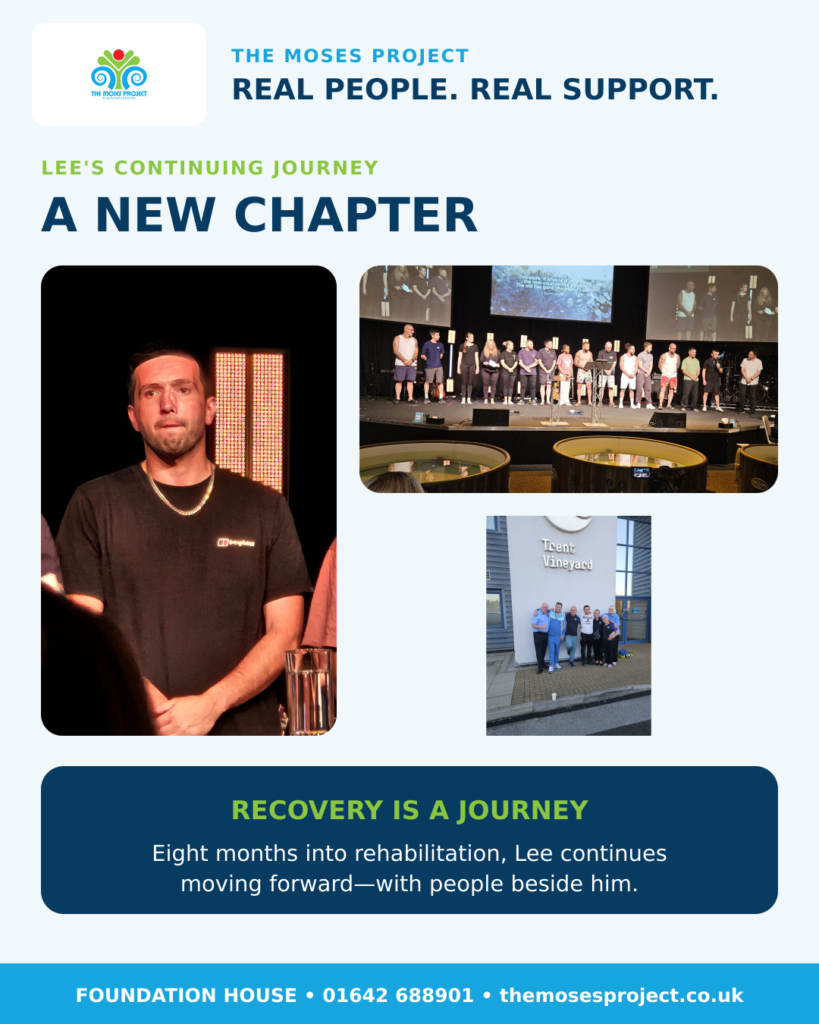
Recovery is made up of many steps. Some are visible to everyone, while others are quiet decisions known only to the person making them. Each one can carry meaning, and each one can help somebody move towards a different future. Lee’s recovery journey has included many meaningful steps. During his time at The Carpenter’s Arms, he chose to be baptised at Trent Vineyard Church. It was an important personal moment: an opportunity to recognise how far he had come while looking ahead to the life he wanted to continue building. A meaningful moment in an ongoing journey For Lee, baptism was a personal decision made during his time in recovery. It marked a significant point in his journey, but recovery does not rest on one event alone. It continues through commitment, support and the choices made each day. Major milestones deserve to be celebrated, but lasting change is also found in the days between them: keeping to a routine, accepting guidance, turning up, being honest and making the next positive choice. Those choices require courage. They may look small from the outside, but together they can create a new direction. There is no single route through recovery Every recovery journey is different. People arrive at help from different circumstances, with different experiences and needs. Progress cannot be measured by comparing one person with another. For some, the first step may be admitting that life has become unmanageable. For others, it may be asking about rehabilitation, rebuilding a relationship or learning how to live with greater structure. What matters is that the individual is supported to move forward in a way that is meaningful to them. Lee’s story reminds us that personal values and beliefs can also have a place in that process. Recovery involves the whole person. It can include practical change, emotional healing, renewed purpose and reflection on what somebody wants their future to stand for. The value of consistent support Change is difficult to sustain in isolation. Encouragement and accountability can make a vital difference, particularly when confidence is low or the road ahead feels uncertain. The Moses Project supports people affected by addiction and homelessness by meeting them where they are. That may begin with listening, practical help or an honest conversation. It can develop into support with treatment options and encouragement as a person continues their recovery elsewhere. Organisations such as The Carpenter’s Arms can become part of that wider journey, providing the structured environment in which people can continue working towards change. Recovery is often strengthened when services, communities and supportive relationships work together around the individual. Recognising progress without adding pressure Sharing recovery stories matters because they show that change is possible. However, every story should be told with care. A positive milestone does not mean that every day which follows will be easy, and a difficult day does not erase the progress already made. Lee’s baptism offered a moment to pause and recognise his journey. It also pointed forward. Recovery continues through the next decision, the next day and the willingness to keep going. Everyone at The Moses Project is pleased to recognise this important chapter in Lee’s story. We wish him strength and encouragement as his journey continues. Do you need support? If you are struggling with addiction or homelessness, contact The Moses Project for a conversation about the support available and the next step that may be right for you. Call: 01642 688901 Visit: Foundation House, Alma Street, Stockton-on-Tees, TS18 2AP Website: www.themosesproject.co.uk Much Love Brian, Stella, Rob n Team Moses ❤️💙
David’s Journey
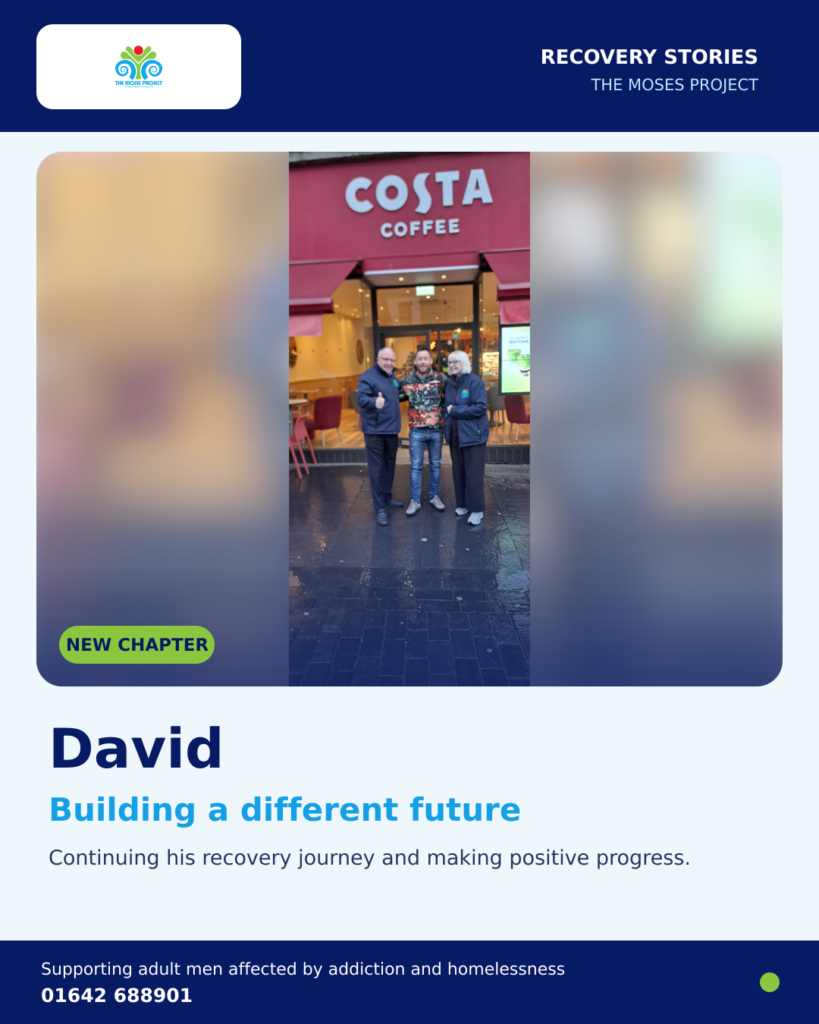
Recovery rarely happens in one dramatic moment. More often, it is built through a series of courageous decisions: accepting help, entering rehabilitation, staying when things feel difficult and choosing, day after day, to keep moving forward. David’s journey is a powerful example of those decisions in action. Taking the first steps towards change David entered rehabilitation before continuing his recovery at Teen Challenge in Scotland. During his time there, members of The Moses Project visited him and saw for themselves the progress he was making. Entering rehabilitation takes courage. It means stepping away from familiar patterns and beginning the difficult work of creating something different. There can be hard days, uncertainty and moments of doubt. That is why encouragement, structure and supportive relationships matter so much. David remained committed to the process and completed his rehabilitation programme at Teen Challenge Scotland—an achievement of which he can be rightly proud. A new chapter at Horizon Completing a rehabilitation programme is a major milestone, but it is not the end of recovery. The period that follows can be just as important. New routines have to be established, positive choices repeated and the lessons learned in rehabilitation carried into everyday life. David has now moved forward to Horizon in Harrogate. This is another important step as he continues building a life beyond the cycle of addiction. We are proud of how far David has come. His progress reflects his own determination, as well as the value of having the right support at the right time. Recovery is personal, and no two journeys follow exactly the same route. What matters is that the next step is possible. Why stories like David’s matter When someone is living with addiction or homelessness, the future can feel very small. Immediate concerns take over: where to sleep, how to get through the day or whether change is even possible. Hope can feel distant. David’s story offers a different message. It does not pretend that recovery is quick or easy. It shows that progress can be made through courage, time, professional help, consistent support and many positive choices along the way. Stories of recovery are also important because they challenge stigma. Addiction does not remove a person’s worth or their capacity to change. Behind every label is an individual with a history, relationships, strengths and hopes for the future. With support and opportunity, a different life can begin to take shape. Walking alongside people for the long term At The Moses Project, we support people affected by addiction and homelessness. That can mean listening without judgement, helping someone understand their options, supporting practical next steps or remaining a familiar source of encouragement as their journey develops. We know that progress is not always a straight line. There may be setbacks as well as achievements. Our role is to keep seeing the person, not simply the problem, and to help them recognise that their story is still being written. David’s next chapter is now underway, and everyone at The Moses Project wishes him continued strength and success. His journey reminds us that recovery is possible, one step and one choice at a time. Do you need support? If you are struggling with addiction or homelessness, or you are worried about somebody you know, please contact The Moses Project for help and advice. Call: 01642 688901 Visit: Foundation House, Alma Street, Stockton-on-Tees, TS18 2AP Website: www.themosesproject.co.uk Much Love Brian, Stella, Rob n Team Moses ❤️💙
Sean’s Journey: Returning Home with Purpose

Recovery rarely follows a simple or predictable path. It takes courage to ask for help, patience to keep taking the next step and the support of people who continue to believe that change is possible. For Sean, that journey brought him to The Moses Project at a time when he needed help and direction. From there, he entered the Betel Manchester recovery programme, where he committed himself to a full year of change, structure and personal growth. After completing the programme, Sean returned home to Stockton-on-Tees. But he did not simply return to the life he had left behind. He came back with experience, renewed purpose and a desire to help other people who may be facing the same struggles he once knew. Today, Sean is volunteering at The Moses Project. Taking the First Step Seeking help can be one of the most difficult parts of any recovery journey. Addiction can gradually affect every part of a person’s life. Relationships can become strained, confidence can disappear and the future can begin to feel impossible to imagine. Even when somebody knows that something needs to change, taking that first step can feel overwhelming. Sean took that step when he came to The Moses Project. Nobody arrives with the same story, and there is no single route that works for everyone. What matters is that a person is met without judgement, listened to and helped to understand what support may be available. For Sean, the next stage of that support was the Betel Manchester programme. A Year of Commitment Completing a full year in a recovery programme is a significant achievement. Recovery is not simply about leaving something harmful behind. It is also about building a different way of living. That can involve developing a routine, taking responsibility, rebuilding confidence and learning how to respond when difficult days come. Structure can play an important role. When life has become chaotic, knowing what the day will hold can provide stability. Regular meals, meaningful activity, shared responsibilities and being expected to turn up can all help create a healthier rhythm. Progress is often found in ordinary, repeated actions. Getting up at a set time. Completing a task. Asking for help. Supporting somebody else. Making a positive decision and then choosing to make it again the following day. Over time, these small actions can begin to rebuild trust — both in other people and in yourself. Sean remained committed to that process and completed the full year. Coming Home Returning home after a residential recovery programme can bring new challenges. The structure of the programme may no longer be around you in the same way. Familiar places, old pressures and difficult memories can still exist. This is why continued support, positive relationships and a sense of purpose can be so important. Sean returned to Stockton and reconnected with The Moses Project. This time, however, he returned not only as someone receiving support, but as someone ready to contribute. He is now volunteering and using what he has experienced to encourage others. Turning Experience into Encouragement There is something especially powerful about receiving support from somebody who understands how difficult the journey can be. Sean cannot make another person’s decisions for them, and no two recovery stories are identical. What he can do is listen, encourage and demonstrate through his own actions that life can move forward. His presence can offer hope to somebody who is only beginning. It can show that asking for help is not weakness. It can show that setbacks do not have to define the future. It can show that somebody who once needed support can later become a source of strength and encouragement for others. Volunteering also gives Sean something valuable to continue moving towards. Purpose, responsibility and belonging all matter. Being part of a team, knowing that your contribution is valued and having people who are pleased to see you can help create a stronger foundation for the future. Sean is not defined only by what he has been through. He is also defined by what he is choosing to do now. What Helps Someone Rebuild? Every recovery journey is personal, but several things can help create the conditions in which lasting change becomes possible. Consistent Support Trust takes time. It grows when people do what they say they will do, continue to listen and remain present when life becomes difficult. A Positive Routine Regular activities and responsibilities can bring stability to days that previously felt chaotic. Routine does not need to be complicated. It simply provides something reliable to build upon. Connection with Others Isolation can make every problem feel heavier. Shared meals, conversations, activities and friendships remind a person that they do not have to face everything alone. Practical Help Recovery can exist alongside concerns about housing, health, benefits, employment and relationships. Practical guidance can remove some of the pressures that make progress harder. Purpose It is important to have something positive to move towards. Volunteering, learning new skills, improving health or helping somebody else can restore confidence and create a sense of direction. Patience Change is rarely a straight line. A difficult day does not erase the progress that came before it. What matters is being encouraged to take the next positive step. Recovery Is Possible Sean’s journey is still his own, and like every person in recovery, he will continue taking it one day at a time. But completing a year at Betel Manchester, returning to Stockton and choosing to volunteer at The Moses Project are achievements worth recognising. His story is a reminder that change is possible. It is also a reminder that support should not end when a programme is completed. People need relationships, structure, encouragement and places where they are welcomed and valued. Sean once came to The Moses Project seeking help. Today, he is using his experience to give something back. That is not only progress. It is hope being passed from one person to another. Nobody Has to Take These
Why Routine Matters When a Man Is Rebuilding His Life

A walk can look like a simple day out. For us, it can be much more than that. When the men from The Moses Project spend time together away from the usual surroundings, the pace changes. There is fresh air, a different view and room for conversation to unfold without being forced. People can walk side by side, stop when they need to and enjoy one another’s company. Sometimes the most important conversation begins when nobody is trying too hard to have it. Trust cannot be rushedMany of the men we support have lived through instability, trauma, homelessness or addiction. Some have had experiences that make it difficult to trust services or believe that another person will stay when things become complicated. Trust is not created by telling somebody to trust us. It grows through consistent actions over time. We say we will be there, and then we are. We listen without judgement. We help with the immediate problem in front of us. We remember what was shared and follow up. A walk offers another place for that consistency to be felt. There is no desk separating us and no expectation that every silence must be filled. The conversation can move between serious things and ordinary things. Both matter. Connection pushes back against isolationIsolation can make every problem heavier. When somebody has lost stable housing, relationships or a sense of belonging, it becomes easier to feel invisible and harder to imagine a different future. Shared activities help break that isolation. They create a chance to be included without first having to explain everything. A man can join the group, walk at his own pace, share a joke, take in the view or simply be present. Being part of something positive can be a quiet but powerful experience. It reminds a person that he is not only a problem to be solved or a case to be managed. He is a member of the group, with something to contribute and people who are glad he came. The value of an ordinary conversationNot every conversation on a walk is about recovery. We might talk about the weather, football, food, the place we are visiting or something funny that happened during the week. That ordinariness matters. People need more than crisis conversations. They need the ease of being known as a whole person and the freedom to enjoy time with others. When a difficult subject does arise, it often feels easier because the relationship already exists. A concern can be mentioned without arranging a formal meeting. A member of the team can listen, ask a gentle question and help work out what support may be needed next. Support is practical and relationalThe Moses Project provides practical guidance and support around the issues that affect daily life, including housing, benefits, health, recovery and access to other services. That practical work is essential. But the way help is offered matters too. A form may need completing, an appointment may need attending or a phone call may need making. Alongside that task is a relationship: somebody taking the time to explain, encourage, advocate and remain present. This is why activities such as walking, cooking and exercising are not separate from the serious work. They are part of the environment in which trust, confidence and belonging can grow. Finding something to move towardsRecovery is often described in terms of what a person must stop or leave behind. That is important, but a sustainable future also needs good things to move towards. Friendship. Purpose. A regular routine. Better health. New skills. A safe place. The feeling of being expected and welcomed. Moments of calm and enjoyment. A coastal walk will not solve every problem. We would never pretend that it could. What it can do is give a man a positive day, a little breathing room and another experience of people choosing to walk alongside him. And sometimes, when the road ahead feels too long, knowing that you do not have to walk it alone is exactly where hope begins. Help us continue supporting local men Your donation helps The Moses Project provide practical care, patient support and a place of belonging. Donate through The Moses Project website.
More than a walk

When life has become shaped by addiction, homelessness or repeated crisis, the days can lose their structure. Appointments are missed. Meals become irregular. Sleep is unsettled. Even a small task can feel too large because everything seems to demand attention at once. At The Moses Project, we know that rebuilding a life rarely begins with one dramatic moment. More often, it begins with ordinary things happening reliably: a door opening when it is supposed to, a warm welcome, a meal shared with other people, an activity to turn up for and somebody who notices whether you are there. Routine can sound dull when life is going well. When life has been chaotic, it can feel like safety. A reason to turn upOur regular activities give the men a reason to get up, get ready and come through the door. That first step matters. Arriving at a familiar place, seeing familiar faces and knowing roughly what the day will hold can reduce some of the uncertainty that makes change feel overwhelming. The goal is not to fill every minute or demand perfection. It is to create a steady rhythm in which positive choices become a little easier to repeat. A man may begin by coming in for food or practical help. Over time, he might join a cooking session, take part in the gym or come along for a walk. Each experience offers another point of connection. Movement without judgementFriday Gym Club is a good example. The session is not about who can lift the most or exercise the longest. It is about participation, encouragement and giving something a go. Physical activity can offer focus and a healthy release for stress. It can also help a person recognise progress in a very immediate way. Another minute on the bike, another careful repetition or simply completing the session can provide a sense of achievement that carries into the rest of the day. Just as importantly, the men do it together. They encourage one another, share the room and experience what it feels like to be part of a group with a positive purpose. Nobody has to be the best. Turning up is enough to begin. Confidence grows through doingThe same principle can be seen when the men cook together. Preparing a meal involves planning, following steps, sharing jobs and solving small problems as they arise. It is practical, social and useful. There is pride in making something from start to finish. There is confidence in learning a skill that can be used again. There is connection in sitting down afterwards and eating together. These moments may appear ordinary, and that is part of their value. Recovery is not lived only in meetings or major decisions. It is lived in kitchens, on walks, at appointments and in all the repeated choices that make everyday life manageable again. Support that stays personalRoutine alone is not the answer. It works because it sits inside relationships built on patience, honesty and trust. The men who come to The Moses Project may also need help with housing, benefits, health appointments, recovery services or an immediate crisis. We respond to those practical needs while continuing to offer something every person deserves: to be listened to without judgement and treated as somebody whose future matters. A difficult week does not erase the progress that came before it. A missed session does not close the door. We keep encouraging the next step, because change is rarely a straight line and support must be steady enough to hold that reality. Small steps make a lifeA regular meal. A Friday workout. A walk in the fresh air. A cup of tea and an honest conversation. None of these things is a complete recovery plan on its own. Together, however, they help create the conditions in which change becomes possible. They offer structure where there was chaos, company where there was isolation and achievable steps where the future once felt too large to face. That is why we value the ordinary days so much at The Moses Project. They are where trust is built, confidence returns and hope starts to feel practical. Help us continue supporting local men Your donation helps The Moses Project provide practical care, patient support and a place of belonging. Donate through The Moses Project website.

